“It’s clear that regardless of personnel, Ruben Amorim will not shift from his 3-4-2-1 even if the pope were to force him,” notes Paul Vickers. “This got me thinking: has there ever been a case of players actively defying a manager’s instructions, not by downing tools and giving up, but by taking up self-devised, alternative tactics and positions that they consider better suited to their abilities and the needs of the team?
And what was the outcome of any such defiant player self-management in terms of the immediate result and then the subsequent fate of the manager and the players?” A cracking question, to which we’ve received plenty of answers, so let’s proceed directly to The Insubordination Files. Brazil v Uruguay, World Cup final round, 1950 “In the moments prior to the last match of the 1950 World Cup, effectively the final, the Uruguay coach Juan López informed his team that their best chance of surviving the powerful offensive line of Brazil would come through adopting a defensive strategy,” writes David Ekstrand.
“After he left, the captain Obdulio Varela stood up and addressed the team himself, saying ‘Juancito is a good man, but today, he is wrong. If we play defensively against Brazil, our fate will be no different from Spain [6-1] or Sweden [7-1].’ Varela then delivered an emotional speech about how they should defy the odds and not be intimidated by fans or the opposing team.
The speech, as was later confirmed, played a huge part in the outcome of this legendary game.” Roma v Chelsea, Inter-Cities Fairs Cup first round, 1965-66 “In 1965, Terry Venables ignored the instructions of Chelsea manager Tommy Docherty in a second leg European tie against Roma,” writes David Warriston. “El Tel instructed Marvin Hinton to play as a sweeper instead of following the Doc’s plan for Chelsea to play their normal domestic system.
The 0-0 result was fine – Chelsea went through 4-1 on aggregate – but within a year Venables was transferred to Spurs with a clash of personalities being a factor.” Benfica v Manchester United, European Cup quarter-final, 1965-66 “There was the famous instance of George Best’s half time apology to Matt Busby (‘Sorry, boss’) in a European Cup match at Benfica,” writes Geoff Wignall.
“Contrary to instructions to keep things tight, with United protecting a 3-2 lead from the first leg, Best ran riot and United were 3-0 up after 14 minutes. End result: 5-1, 8-3 on aggregate.” Borussia Mönchengladbach v FC Koln, DFB-Pokal final, 1972-73 “In the 1973 German Cup final, Borussia Mönchengladbach were up against local rivals Koln,” begins Alex von Fintel.
“Gladbach and Germany legend Günter Netzer was off to Real Madrid at the end of the season and had been left on the bench for what he had hoped would be a victorious farewell. Despite the fans shouting his name, and his team hanging on with the score 1-1, manager Hennes Weisweiler didn’t bring Netzer on. So before extra-time Netzer went to the linesman and took care of things himself – coming on and scoring the winning goal!” According to the great Uli Hesse, Netzer had originally declined to go on at half-time and then changed his mind before extra-time.
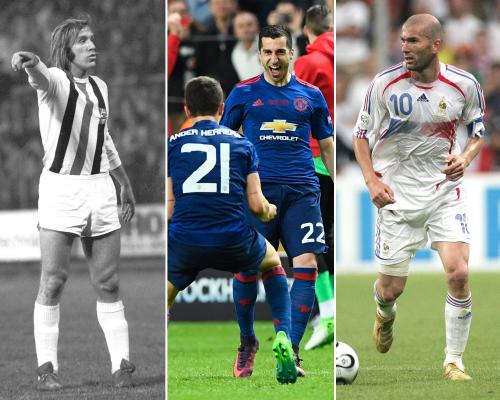
There’s more detail in this ESPN article. France (2006 and 2010 World Cups) “France were pretty dire in the first two games of the 2006 World Cup, which was probably down to the hapless management of Raymond Domenech,” opines Tom Parternoster-Howe. “Fortunately, just about the only decent thing Domenech did in his time as coach was to persuade Zinedine Zidane, Lilian Thuram and Claude Makélélé to come out of retirement in 2005, ensuring France’s qualification.
Draws with Switzerland and South Korea in their first two games in Germany left France needing a win against Togo to qualify. At some point – either before the Togo game or the last-16 match against Spain – the players stopped listening to Domenech and started organising things for themselves. “Zidane was rumoured to be the driving force behind this, and if you see his coaching career, it seems highly plausible.
The results and performances improved significantly. Victories over Spain, Brazil and Portugal took France to a final against Italy, and we all know what happened there. It’s fair to say that Zidane used his head throughout the tournament.
It worked out pretty well for Domenech too; his contract was extended to 2010. There was another player mutiny there, but that one didn’t work out quite as well, probably because the behavioural matters overrode the tactical.” Ajax v Manchester United, Europa League final, 2016-17 Manchester United beat Ajax 2-0 in Stockholm to win their second trophy in José Mourinho’s first season at Old Trafford.
The second goal, scored by Henrikh Mkhitaryan just after half-time, came as a result of Ander Herrera going rogue. Mourinho had instructed Mkhitarayan to stay 30 yards from goal when United won a corner, mainly because his pace would help stop any Ajax counter-attacks at source. But he had been...